One year on – our support of Cancer Research UK’s Lung Cancer Centre of Excellence
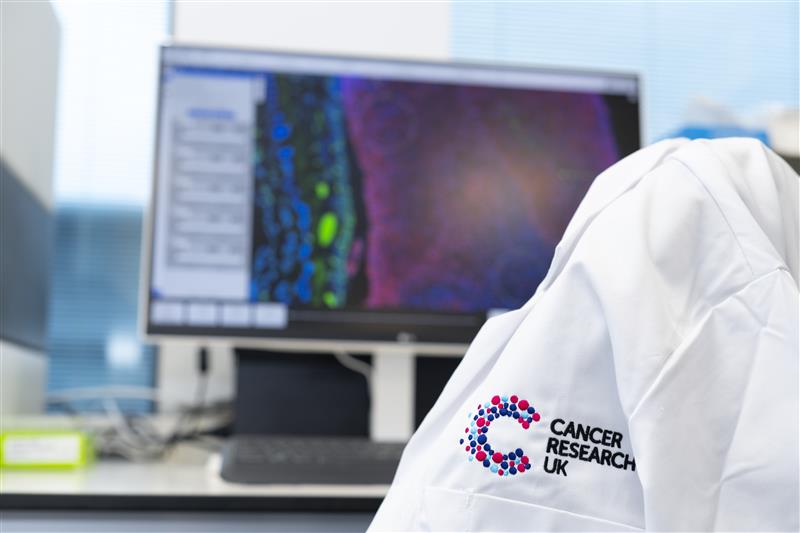
One year on after we announced our 5-year support of Cancer Research UK’s Lung Cancer Centre of Excellence (LCCE), with a commitment of up to £4m, we’re proud to spotlight a powerful example of the kind of research made possible by the LCCE. Lung cancer is the third most common cancer in the UK, so this type of research is vital in helping scientists understand how the disease develops, and how to prevent and treat it to save more lives.
The LCCE, which brings together teams in Manchester and London, was created to unite world-class expertise in lung cancer biology, early detection and treatment innovation. It seeks to build a collaborative research ecosystem that accelerates progress in taking lung cancer prevention, detection and treatment methods from the lab bench to the hospital bedside.
To achieve this, understanding how lung cancer starts and spreads is vital. Through a study that integrates state-of-the-art molecular and cellular technologies, Dr Carlos Lopez-Garcia and his research team at the Cancer Research UK Manchester Institute, were doing just this with funding from the NC3Rs, Cancer Research UK and the Rosetrees Trust. The team has created a way to generate lung cancer cells in the lab using healthy cells. By carefully modifying these cells, they have created a model of the early stages of lung squamous cell carcinoma, a common and particularly hard-to-treat form of lung cancer.
Part of the challenge with lung cancer is that it is often diagnosed at a late stage, meaning the samples available for research are also mostly from more advanced cancers. But, thanks to the work of Dr Carlos-Lopez Garcia and his team, researchers can use this new early-stage model. This means researchers can better understand how the disease starts and grows. This method is faster, more ethical and can be more reliable than older methods involving live animals. Identifying the driving force behind the formation of lung squamous cell carcinoma is a key step towards developing better tools for diagnosis. “This new approach gives us a clearer insight into how lung cancer develops”, says Dr Carlos-Lopez Garcia, currently working at the North Wales Medical School (Bangor University). “Developments like these accelerate research into new therapies and improve existing ones, powering us through clinical advancements for years to come.” Our support of up to £4m will help to lay the foundations that make breakthroughs like this possible.
Thanks in part to research, lung cancer survival has increased. In the early 1970s, almost 5 in 100 (3.3%) people diagnosed with lung cancer in the UK survived their disease for ten years or more. By 2018, it was around 1 in 10 (11.1%). But as long as lung cancer survival continues to lag behind other cancer types, we need to go further, faster.
This lung cancer research strives to change the outcome for families like Brian Jack’s. Brian, a Health and Safety Manager in ScottishPower Renewables, lost his father Tom to stage 4 lung cancer after Tom had been suffering from back pain. Despite efforts to begin treatment, Tom was too unwell to proceed and was eventually admitted to St Andrew’s Hospice in Coatbridge, where he spent his final four weeks with Brian by his side. Tom died in August 2025.
Brian said, “If Dad had been diagnosed sooner, maybe there would have been treatments that could have helped. Supporting Cancer Research UK could help unlock future breakthroughs that could change lives — including lives like my Dad’s with cancer at stage 4.
“Our partnership with ScottishPower is helping to build the foundations for long-term progress in one of the toughest areas of cancer research,” says Michelle Mitchell, Chief Executive of Cancer Research UK, reflecting on the power of this partnership. “By supporting the Lung Cancer Centre of Excellence, ScottishPower is enabling the kind of bold, collaborative science that can shift the dial on early detection and treatment.”
Andrew Ward, CEO of Customer Business at ScottishPower says: “I’m incredibly proud of what we’ve achieved for Cancer Research UK through our long-standing partnership. Over £40m for life-saving work is nothing short of phenomenal. “We’re determined we’re not stopping now. Cancer affects all of us, whether personally or through someone we know and care for, like Brian and his father. Lung cancer is one of the UK’s biggest killers and so it’s incredibly important to me that this money will go where it’s really needed – towards research that can help more people live longer, better lives, free from the fear of cancer.”
*Based on the average annual number of lung cancer deaths (ICD10 C33-C34) as a proportion of deaths from all cancers (ICD10 C00-C97) in the UK in the years 2021-2023.
Cancer Research UK is a registered charity (England & Wales, 1089464; Scotland, SC041666; Isle Of Man, 1103; Jersey, 247).
Last updated: 18 November 2025