Do solar panels work in the UK if it’s cloudy? What UK homeowners need to know
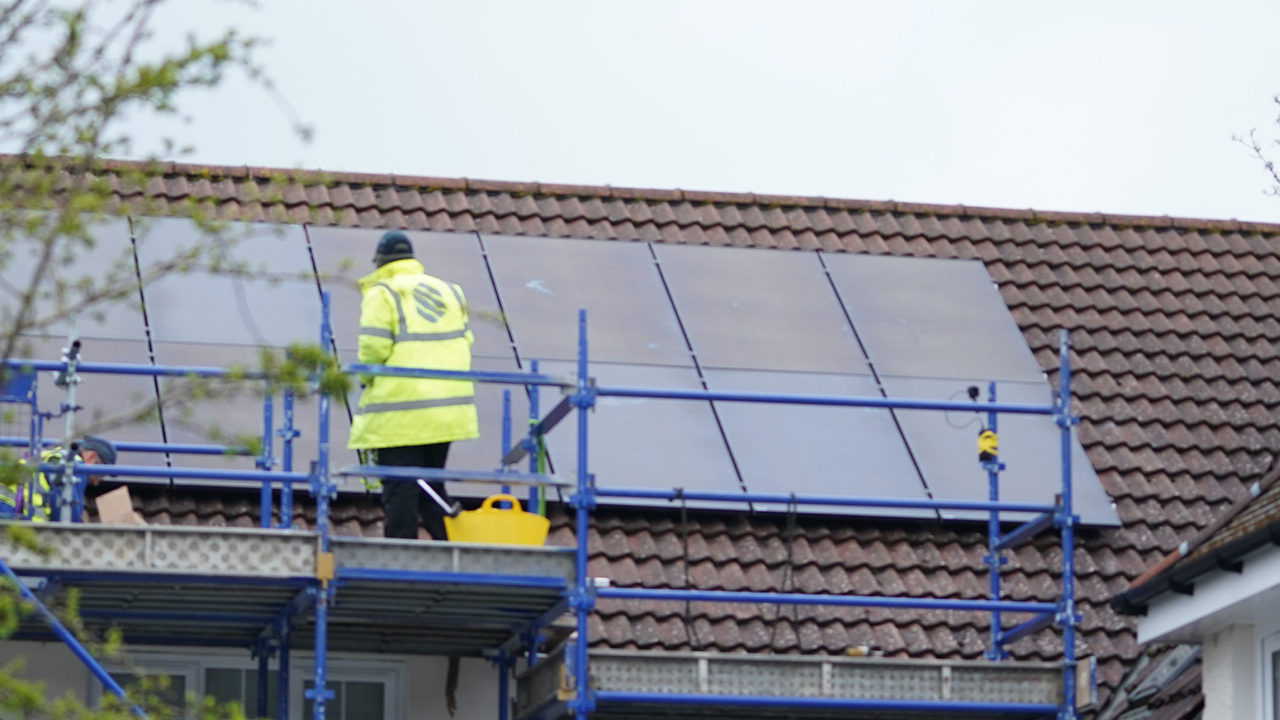
During our research, we found that more than a third of respondents1 believe solar panels only work when it’s sunny.
But solar panels don’t stop working when the sun disappears behind clouds. They continue generating electricity throughout the day - just at a lower level than on bright, sunny days.
We’ve got more in this blog about how solar panels work in the UK, and you can find all the need-to-know information about solar panels on our website.
Sunshine vs daylight: what matters
As we’ve seen in our research, many people assume solar panels rely on heat or direct sunshine. In reality, solar panels work by converting light into electricity. That means they can generate power from:
Direct sunlight
Diffused light (through clouds)
Ambient daylight
Even when the sun isn’t visible, light is still reaching your panels, so they still work in places with less sunshine like the UK. In fact, the technology was designed with this in mind.
What affects how much electricity solar panels generate
While weather certainly plays a role, it’s far from the only thing that affects how much electricity solar panels generate. Each house is going to be different, so you need to consider the below factors too:
1. Roof size
The more roof space you have, the more panels you can install, and the more electricity you can generate.
2. Roof direction
South-facing roofs typically capture the most sunlight, but east- and west-facing roofs still perform well and can generate strong output throughout the day.
3. Roof pitch (angle)
Roof angle affects how efficiently panels capture light. A steeper pitch can improve solar panel efficiency, but if this isn’t the case for your roof, don’t worry - your installer will discuss any adjustments they can make to the angle of your solar panels to get the most out of them.
4. Shade and surroundings
Nearby trees, buildings, or chimneys can reduce output by blocking light at certain times of day. As part of their tailored design, installers will recommend if optimisers are required to make sure the shaded areas don’t reduce the output of your panels.
5. Time of year
Solar panels in the UK generate more in summer thanks to longer daylight hours, and less in winter - but they don’t stop working entirely.
6. Panel technology
Modern panels are specifically designed to still perform in low-light conditions, capturing more diffused light than older models.
As you can see, solar panel performance doesn’t depend on sunlight, but rather a combination of your roof, your system design, and the daylight available year-round.
A real example from Lancashire
If you want proof closer to home, look at solar panels in the north of England. As part of The Great Green Challenge on Tour, George Clarke spoke to Mark at his home in Bolton, Lancashire, to find out how well solar panels have worked for his home since their installation over 10 years ago.
Mark’s experience with solar panels showed us that even in cloudier regions, daylight hours are still enough to support strong solar generation.
It’s important to remember that with solar panels:
electricity is generated on most days of the year
output builds gradually over time
savings come from consistent generation - not perfect weather.
When a solar battery could help
While solar panels generate electricity during the day, most households use more energy in the evening. That’s where a solar battery can make a difference.
A battery allows you to:
store excess energy generated during the day
use it later, when your panels aren’t producing
reduce reliance on the grid even further
Next steps
If you’re considering solar panels, the next step isn’t to wait for better weather. Instead, it helps to understand how they would work for your home. That means looking at:
Your roof size, pitch and direction
Your energy use
Whether you could benefit from a battery installation as well
Ultimately, the success of solar panels is defined by how well your system is designed for your home, not how sunny it is outside - and with ScottishPower, you can count on our expert installers to give you guidance at every step. Our one-stop solar shop includes:
- Solar panel and battery options tailored for your home
GB-wide MCS and Trustmark-certified installers
- 25 year manufacturer and 2 year workmanship warranty2
No hidden extras – scaffolding & bird-proofing included as standard
- Access to our SmartGen+ Export Tariff3
- Our Solar Saver tariff4, giving you a lower electricity rate between 7pm and 9am
You can get a personalised solar quote from us online or speak to a ScottishPower solar expert for tailored advice. We’ll provide you with a full solar panel and solar battery proposal for your home, including costs and recommendations, free of charge.
1
The research was conducted by Censuswide, among a sample of 2,000 nationally representative UK consumers (aged 18+). The data was collected between 20.02.2026 - 23.02.2026 Censuswide abides by and employs members of the Market Research Society and follows the MRS code of conduct and ESOMAR principles. Censuswide is also a member of the British Polling Council.
2
Home suitability restrictions apply.
3
To be eligible for our SEG tariffs, you must own a system that generates electricity, have a meter that records exports every half hour, and installation certificate and confirmation your system is connected to the grid. Eligibility criteria and T&Cs apply.
4
To be eligible for our Solar Saver tariff, you must be a ScottishPower electricity customer, have a communicating smart meter that sends half-hourly readings and pay by monthly Direct Debit. Exclusions and T&Cs apply.
Last updated: 12 August 2026